Many times with progression of disease or impairment, the ability to communicate subsides.
Along with that loss, the ability to effectively communicate pain decreases. We all know that as the body ages some natural aches and pains happen. There could also be pain from something extra going on. I hate to compare an adult that has lived a full life and has decades of lived experience, to an infant or toddler, but that is what I am about to do.
When a six month old starts teething, they are unable to tell you why they are fussy. Mom, dad, or other caretaker needs to look at symptoms. Then use “compassionate math” , aka informed guess, to decide if medication is needed.
The same holds true for the adult for whom you are caring.
Look at symptoms and reactions then use “compassionate math” to decide whether or not pain medication is in order. For example: Limping plus moaning equals doctor approved over the counter pain medication. That is what I mean by compassionate math.
Some are quick to call something a behavior instead of intervening to alleviate pain. I think it’s a normal human condition to try to help somebody to avoid suffering, but that only works if you recognize the suffering correctly.
Once the ability to communicate about pain disappears, the situation is complicated.
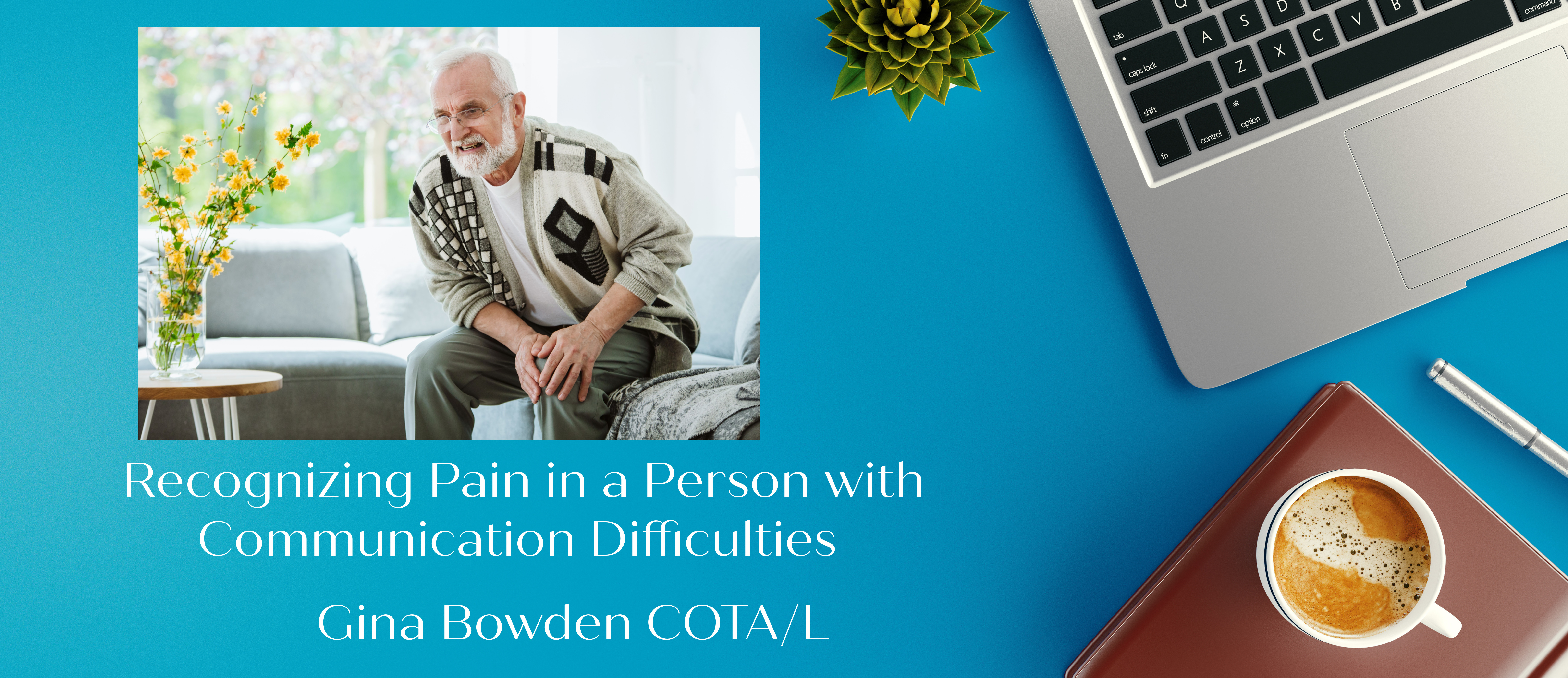
You can even ask the person if they are in pain and they will deny it. Yet you can plainly see them limping, hear them moaning or grunting. Or they refuse to stand up.
When the person you’re caring for refuses to stand,
they are not being difficult or acting in anger.
It is very possible they have a sore knee, or hip, or back and standing increases that pain. Even the fear of pain can be debilitating, so if you someone had a broken hip in the past it is likely they still remember the pain. It may have been six or eight months ago when pain first appeared when they stood, but they may still be leery about standing now.
Sometimes pain just looks like “something’s off”.
You most likely know your person better than anyone Use your knowledge and experience with this person to your advantage. Most often the caretaker is a spouse or a child. In both of these relationships you spend a lot of time reading the other person to see if they are doing well, pleased with what is happening at that moment, having a good day or a bad day etc. You already have experience knowing what this person likes, what this person does not like, how they react when sad, and more.
It is true that some neurological diseases will affect these reactions, but that core person is still there. it is good to use that prior knowledge to help them.
Some specific symptoms to look for when you feel like “something is off” can found on this checklist.
For those using a walker: limping or favoring one side may not be leg pain. It could actually be arm or shoulder pain when they put weight through that arm into the walker. You can always look at a joint you suspect and inspect it. If it’s red, or hot, or swollen it’s a very good possibility that that is the pain source.
A person may have had knee pain for years before.
However, if they have a neurological disease they may be no longer able to process and understand why their knee hurts all the time now. Or that football injury in high school when they rolled their ankle may not be remembered anymore, but is instead showing up as misunderstood aches and pain.
Sometimes waking up in the middle of the night is caused by pain.
Or sometimes by a full bladder as we all well know. If the person has been laying in the same position for a couple of hours, that could cause back pain or hip pain, even if laying flat on their back. We all wake up slightly throughout the night to roll over as our body is uncomfortable and needs to assume another position.
Sometimes the trigger to wake up slightly is overdone, and the person wakes up more fully. Especially if pain is a higher level past the point of discomfort. If they have taken a sudden down turn in their level of activity during the day that is a good indicator of pain as well.
Tooth pain – unless there are dentures of course – is a common source of pain.
Unfortunately dental care goes down as healthy declines, and as teeth age they’re more vulnerable. If you have ever had a toothache you know that that pain can be referred to a different spot in your head and make you feel like actually your ear hurts or it can make you nauseous.
Cavities can definitely cause a lot of pain and loss of appetite.
Cavities are not always visible to someone not trained in dentistry so regular dental visits are important. As a person loses weight their dentures most likely will not fit properly. This is not only uncomfortable when you’re eating, but also will cause sores and pain throughout the day. Clues that dentures no longer fit includes the person moving them around in their mouth, pulling them out during meal times, or throughout the day. Obviously if they fall out that’s another good clue. Mouth pain is easily overlooked, but should not be forgotten.

Obviously there are more things that could be causing pain than what is listed here.
You likely know the baseline of normal activity for your family member. Note any significant changes and consider how that may or may not cause pain for them.
Written by Gina Bowden, COTA/L
Always ask your doctor for advice about your specific disease or condition.